Font Size
Romans 3:19-31
New International Version
Romans 3:19-31
New International Version
19 Now we know that whatever the law says,(A) it says to those who are under the law,(B) so that every mouth may be silenced(C) and the whole world held accountable to God.(D) 20 Therefore no one will be declared righteous in God’s sight by the works of the law;(E) rather, through the law we become conscious of our sin.(F)
Righteousness Through Faith
21 But now apart from the law the righteousness of God(G) has been made known, to which the Law and the Prophets testify.(H) 22 This righteousness(I) is given through faith(J) in[a] Jesus Christ(K) to all who believe.(L) There is no difference between Jew and Gentile,(M) 23 for all have sinned(N) and fall short of the glory of God, 24 and all are justified(O) freely by his grace(P) through the redemption(Q) that came by Christ Jesus. 25 God presented Christ as a sacrifice of atonement,[b](R) through the shedding of his blood(S)—to be received by faith. He did this to demonstrate his righteousness, because in his forbearance he had left the sins committed beforehand unpunished(T)— 26 he did it to demonstrate his righteousness at the present time, so as to be just and the one who justifies those who have faith in Jesus.
27 Where, then, is boasting?(U) It is excluded. Because of what law? The law that requires works? No, because of the law that requires faith. 28 For we maintain that a person is justified by faith apart from the works of the law.(V) 29 Or is God the God of Jews only? Is he not the God of Gentiles too? Yes, of Gentiles too,(W) 30 since there is only one God, who will justify the circumcised by faith and the uncircumcised through that same faith.(X) 31 Do we, then, nullify the law by this faith? Not at all! Rather, we uphold the law.
Footnotes
- Romans 3:22 Or through the faithfulness of
- Romans 3:25 The Greek for sacrifice of atonement refers to the atonement cover on the ark of the covenant (see Lev. 16:15,16).
New International Version (NIV) 
Holy Bible, New International Version®, NIV® Copyright ©1973, 1978, 1984, 2011 by Biblica, Inc.® Used by permission. All rights reserved worldwide.
NIV Reverse Interlinear Bible: English to Hebrew and English to Greek. Copyright © 2019 by Zondervan.
Bible Gateway Recommends

Retail: $59.99
Our Price: $41.99
Save: $18.00 (30%)
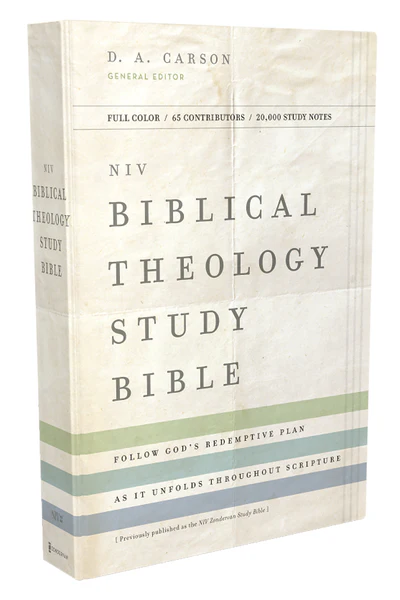
Retail: $59.99
Our Price: $41.99
Save: $18.00 (30%)
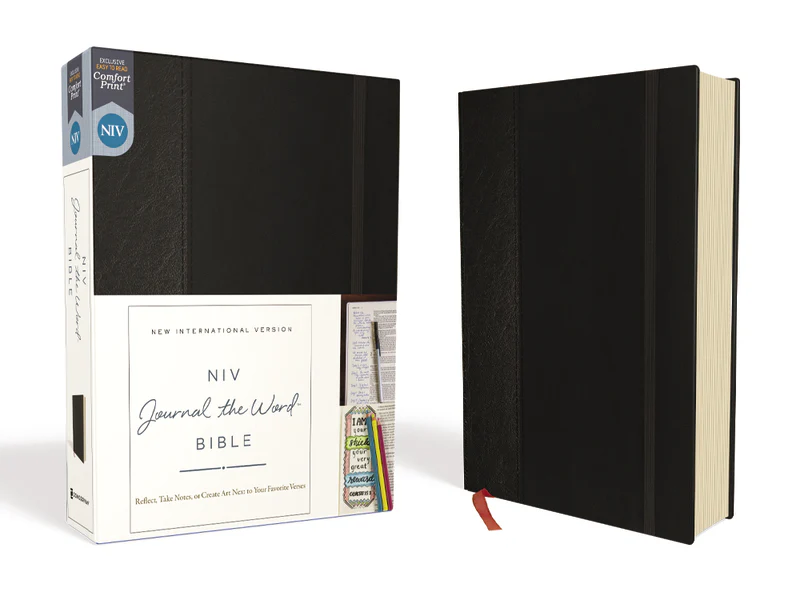
Retail: $39.99
Our Price: $27.99
Save: $12.00 (30%)

Retail: $69.98
Our Price: $48.99
Save: $20.99 (30%)

Retail: $59.99
Our Price: $41.99
Save: $18.00 (30%)

Retail: $54.99
Our Price: $35.00
Save: $19.99 (36%)