Font Size
Numbers 34-36
New International Version
Numbers 34-36
New International Version
Boundaries of Canaan
34 The Lord said to Moses, 2 “Command the Israelites and say to them: ‘When you enter Canaan,(A) the land that will be allotted to you as an inheritance(B) is to have these boundaries:(C)
3 “‘Your southern side will include some of the Desert of Zin(D) along the border of Edom. Your southern boundary will start in the east from the southern end of the Dead Sea,(E) 4 cross south of Scorpion Pass,(F) continue on to Zin and go south of Kadesh Barnea.(G) Then it will go to Hazar Addar and over to Azmon,(H) 5 where it will turn, join the Wadi of Egypt(I) and end at the Mediterranean Sea.
6 “‘Your western boundary will be the coast of the Mediterranean Sea.(J) This will be your boundary on the west.(K)
7 “‘For your northern boundary,(L) run a line from the Mediterranean Sea to Mount Hor(M) 8 and from Mount Hor to Lebo Hamath.(N) Then the boundary will go to Zedad, 9 continue to Ziphron and end at Hazar Enan. This will be your boundary on the north.
10 “‘For your eastern boundary,(O) run a line from Hazar Enan to Shepham. 11 The boundary will go down from Shepham to Riblah(P) on the east side of Ain(Q) and continue along the slopes east of the Sea of Galilee.[a](R) 12 Then the boundary will go down along the Jordan and end at the Dead Sea.
“‘This will be your land, with its boundaries on every side.’”
13 Moses commanded the Israelites: “Assign this land by lot(S) as an inheritance.(T) The Lord has ordered that it be given to the nine and a half tribes, 14 because the families of the tribe of Reuben, the tribe of Gad and the half-tribe of Manasseh have received their inheritance.(U) 15 These two and a half tribes have received their inheritance east of the Jordan across from Jericho, toward the sunrise.”
16 The Lord said to Moses, 17 “These are the names of the men who are to assign the land for you as an inheritance: Eleazar the priest and Joshua(V) son of Nun. 18 And appoint one leader from each tribe to help(W) assign the land.(X) 19 These are their names:(Y)
Caleb(Z) son of Jephunneh,
from the tribe of Judah;(AA)
20 Shemuel son of Ammihud,
from the tribe of Simeon;(AB)
21 Elidad son of Kislon,
from the tribe of Benjamin;(AC)
22 Bukki son of Jogli,
the leader from the tribe of Dan;
23 Hanniel son of Ephod,
the leader from the tribe of Manasseh(AD) son of Joseph;
24 Kemuel son of Shiphtan,
the leader from the tribe of Ephraim(AE) son of Joseph;
25 Elizaphan son of Parnak,
the leader from the tribe of Zebulun;(AF)
26 Paltiel son of Azzan,
the leader from the tribe of Issachar;
27 Ahihud son of Shelomi,
the leader from the tribe of Asher;(AG)
28 Pedahel son of Ammihud,
the leader from the tribe of Naphtali.”
29 These are the men the Lord commanded to assign the inheritance to the Israelites in the land of Canaan.(AH)
Towns for the Levites
35 On the plains of Moab by the Jordan across from Jericho,(AI) the Lord said to Moses, 2 “Command the Israelites to give the Levites towns to live in(AJ) from the inheritance the Israelites will possess. And give them pasturelands(AK) around the towns. 3 Then they will have towns to live in and pasturelands for the cattle they own and all their other animals.(AL)
4 “The pasturelands around the towns that you give the Levites will extend a thousand cubits[b] from the town wall. 5 Outside the town, measure two thousand cubits[c](AM) on the east side, two thousand on the south side, two thousand on the west and two thousand on the north, with the town in the center. They will have this area as pastureland for the towns.(AN)
Cities of Refuge(AO)
6 “Six of the towns you give the Levites will be cities of refuge, to which a person who has killed someone may flee.(AP) In addition, give them forty-two other towns. 7 In all you must give the Levites forty-eight towns, together with their pasturelands. 8 The towns you give the Levites from the land the Israelites possess are to be given in proportion to the inheritance of each tribe: Take many towns from a tribe that has many, but few from one that has few.”(AQ)
9 Then the Lord said to Moses: 10 “Speak to the Israelites and say to them: ‘When you cross the Jordan into Canaan,(AR) 11 select some towns to be your cities of refuge, to which a person who has killed someone(AS) accidentally(AT) may flee. 12 They will be places of refuge from the avenger,(AU) so that anyone accused of murder(AV) may not die before they stand trial before the assembly.(AW) 13 These six towns you give will be your cities of refuge.(AX) 14 Give three on this side of the Jordan and three in Canaan as cities of refuge. 15 These six towns will be a place of refuge for Israelites and for foreigners residing among them, so that anyone who has killed another accidentally can flee there.
16 “‘If anyone strikes someone a fatal blow with an iron object, that person is a murderer; the murderer is to be put to death.(AY) 17 Or if anyone is holding a stone and strikes someone a fatal blow with it, that person is a murderer; the murderer is to be put to death. 18 Or if anyone is holding a wooden object and strikes someone a fatal blow with it, that person is a murderer; the murderer is to be put to death. 19 The avenger of blood(AZ) shall put the murderer to death; when the avenger comes upon the murderer, the avenger shall put the murderer to death.(BA) 20 If anyone with malice aforethought shoves another or throws something at them intentionally(BB) so that they die 21 or if out of enmity one person hits another with their fist so that the other dies, that person is to be put to death;(BC) that person is a murderer. The avenger of blood(BD) shall put the murderer to death when they meet.
22 “‘But if without enmity someone suddenly pushes another or throws something at them unintentionally(BE) 23 or, without seeing them, drops on them a stone heavy enough to kill them, and they die, then since that other person was not an enemy and no harm was intended, 24 the assembly(BF) must judge between the accused and the avenger of blood according to these regulations. 25 The assembly must protect the one accused of murder from the avenger of blood and send the accused back to the city of refuge to which they fled. The accused must stay there until the death of the high priest,(BG) who was anointed(BH) with the holy oil.(BI)
26 “‘But if the accused ever goes outside the limits of the city of refuge to which they fled 27 and the avenger of blood finds them outside the city, the avenger of blood may kill the accused without being guilty of murder. 28 The accused must stay in the city of refuge until the death of the high priest; only after the death of the high priest may they return to their own property.
29 “‘This is to have the force of law(BJ) for you throughout the generations to come,(BK) wherever you live.(BL)
30 “‘Anyone who kills a person is to be put to death as a murderer only on the testimony of witnesses. But no one is to be put to death on the testimony of only one witness.(BM)
31 “‘Do not accept a ransom(BN) for the life of a murderer, who deserves to die. They are to be put to death.
32 “‘Do not accept a ransom for anyone who has fled to a city of refuge and so allow them to go back and live on their own land before the death of the high priest.
33 “‘Do not pollute the land where you are. Bloodshed pollutes the land,(BO) and atonement cannot be made for the land on which blood has been shed, except by the blood of the one who shed it. 34 Do not defile the land(BP) where you live and where I dwell,(BQ) for I, the Lord, dwell among the Israelites.’”
Inheritance of Zelophehad’s Daughters(BR)
36 The family heads of the clan of Gilead(BS) son of Makir,(BT) the son of Manasseh, who were from the clans of the descendants of Joseph,(BU) came and spoke before Moses and the leaders,(BV) the heads of the Israelite families. 2 They said, “When the Lord commanded my lord to give the land as an inheritance to the Israelites by lot,(BW) he ordered you to give the inheritance of our brother Zelophehad(BX) to his daughters. 3 Now suppose they marry men from other Israelite tribes; then their inheritance will be taken from our ancestral inheritance and added to that of the tribe they marry into. And so part of the inheritance allotted to us will be taken away. 4 When the Year of Jubilee(BY) for the Israelites comes, their inheritance will be added to that of the tribe into which they marry, and their property will be taken from the tribal inheritance of our ancestors.”
5 Then at the Lord’s command Moses gave this order to the Israelites: “What the tribe of the descendants of Joseph is saying is right. 6 This is what the Lord commands for Zelophehad’s daughters: They may marry anyone they please as long as they marry within their father’s tribal clan. 7 No inheritance(BZ) in Israel is to pass from one tribe to another, for every Israelite shall keep the tribal inheritance of their ancestors. 8 Every daughter who inherits land in any Israelite tribe must marry someone in her father’s tribal clan,(CA) so that every Israelite will possess the inheritance of their ancestors. 9 No inheritance may pass from one tribe to another, for each Israelite tribe is to keep the land it inherits.”
10 So Zelophehad’s daughters did as the Lord commanded Moses. 11 Zelophehad’s daughters—Mahlah, Tirzah, Hoglah, Milkah and Noah(CB)—married their cousins on their father’s side. 12 They married within the clans of the descendants of Manasseh son of Joseph, and their inheritance remained in their father’s tribe and clan.(CC)
13 These are the commands and regulations the Lord gave through Moses(CD) to the Israelites on the plains of Moab by the Jordan across from Jericho.(CE)
Footnotes
- Numbers 34:11 Hebrew Kinnereth
- Numbers 35:4 That is, about 1,500 feet or about 450 meters
- Numbers 35:5 That is, about 3,000 feet or about 900 meters
New International Version (NIV) 
Holy Bible, New International Version®, NIV® Copyright ©1973, 1978, 1984, 2011 by Biblica, Inc.® Used by permission. All rights reserved worldwide.
NIV Reverse Interlinear Bible: English to Hebrew and English to Greek. Copyright © 2019 by Zondervan.
Bible Gateway Recommends
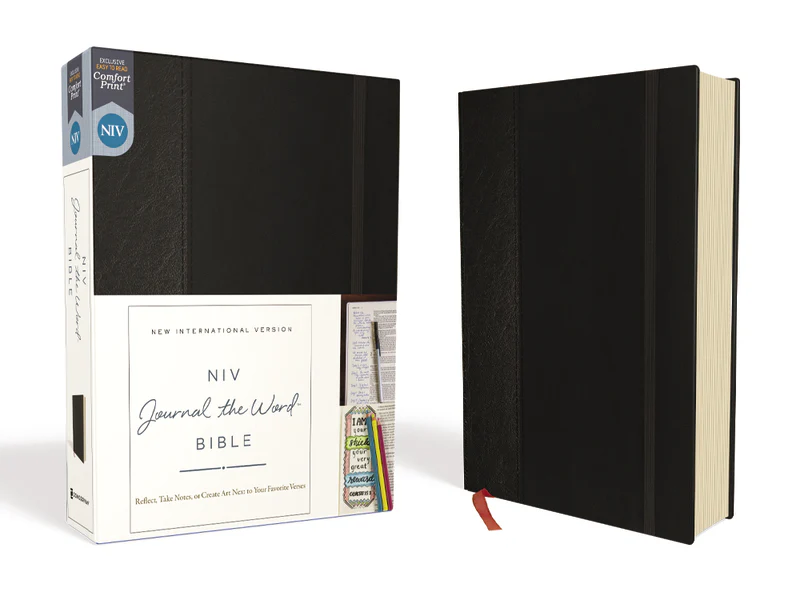
Retail: $39.99
Our Price: $27.99
Save: $12.00 (30%)

Retail: $54.99
Our Price: $35.00
Save: $19.99 (36%)
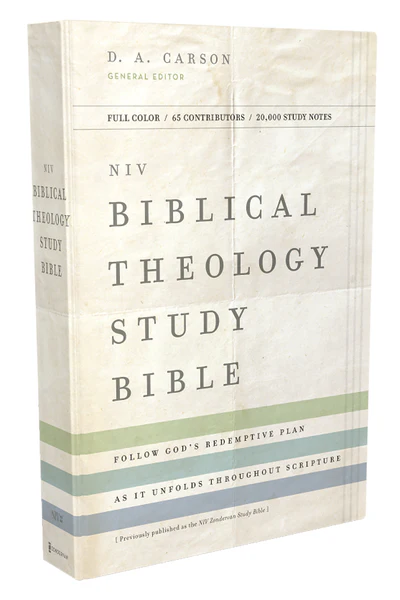
Retail: $59.99
Our Price: $41.99
Save: $18.00 (30%)

Retail: $19.98
Our Price: $7.50
Save: $12.48 (62%)
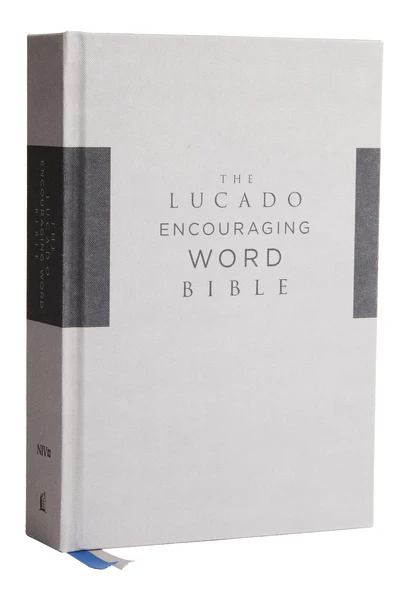
Retail: $59.99
Our Price: $41.99
Save: $18.00 (30%)
Retail: $49.99
Our Price: $34.99
Save: $15.00 (30%)