Meeting in Orlando, Florida, last week, Southern Baptists voted overwhelmingly for the “Truth and Unity” amendment to their constitution, requiring all its 46,000 affiliated churches to ban women from the office of pastor or ministering in a pastoral role — “specifically preaching to the assembled congregation.”
“This is a great opportunity to speak in truth, in unity and conviction consistent with our confession,” Albert Mohler, Ph.D., and head of Louisville’s Southern Seminary, one of the nation’s largest, said from the convention floor on Wednesday, June 10, at the Orange County Convention Center. About 20,000 messengers (delegates) attended.
“There’s a great line that divides liberal and biblical evangelicalism. The trajectory of liberal denominations is very clear. The Southern Baptist Convention in adopting the Baptist Faith and Message in the year 2000, stated confessionally that the office of pastor is limited to men as qualified by Scripture.
“In 26 subsequent years have demonstrated that we need constitutional clarity on this issue. This will allow Southern Baptists to move forward in unity and in truth.”
The Truth and Unity Amendment
The proposed Truth and Unity amendment to the SBC Constitution, article 3 says: “a cooperating Southern Baptist church does not act to affirm, appoint, or endorse a woman serving in the office or function of a pastor/elder/overseer, especially preaching to the assembled congregation.”
Mohler said his amendment follows the language of the 1689 London Baptist Confession, a lengthy document that ties Baptist faith and practice to the Bible and Calvinist theology. But the confession includes no ban on women pastors. In 1689, about 100 Baptist churches in London approved the confession following the English Parliament’s passage of the famous Act of Toleration. This act allowed religious freedom and legal co-existence for Baptist churches alongside the established Churches of England and Scotland.
Although there are 53 million Baptists worldwide, Southern Baptists are disproportionately influential. In the U.S., Southern Baptists are by far the largest Protestant group with 12.3 million members, though like many other denominations they have suffered ongoing decline over the past two decades. Their seminaries are the largest nationally and the denomination supports over 20,000 missionaries in 185 nations.
Debate Over Women in Ministry
The debate over the amendment lasted less than 10 minutes. Two male convention messengers spoke — one against the amendment, questioning its necessity. Colin Smothers, executive director of The Council and Biblical Manhood and Womanhood, spoke on the convention floor in favor of the amendment, asking messengers, “What better way to express our countercultural commitment to the goodness of God’s word than to affirm God’s created order related to the office of pastor?”
Smothers “called the question,” triggering an end to debate and, moments later, messengers voted by 75% in favor of the amendment, which must also receive a two-thirds minimum vote at the 2027 convention for enactment. Earlier attempts to pass similar amendments had failed repeatedly.
Baptist Critics of the Amendment
Opponents of the amendment come from within and without the larger Baptist movement. Some critics argued that the ban runs counter to Baptist and Southern Baptist history and culture. In 1815, Clarissa Danforth was ordained as an itinerant Free Will Baptist pastor, serving in Rhode Island and Vermont, decades before the SBC was established in 1845. In 1964, Addie Elizabeth Davis became the first Southern Baptist woman to be ordained. She was a seminary graduate and served at Watts Street Baptist church in North Carolina. (That church is no longer connected to the SBC.)
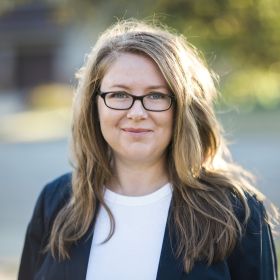
Meredith Stone, Ph.D., the ordained executive director of Baptist Women in Ministry, is among the amendment’s most outspoken critics. BWIM funded a large billboard outside the Orlando convention center that read, “God calls women to pastor, preach, and minister,” citing Matthew 28:8 and Acts 2:17-18.

Those verses — referencing the angels’ command to Mary Magdalene and “the other Mary” to tell Jesus’ disciples of his resurrection, and Peter preaching on Pentecost about the fulfillment of the prophet Joel’s predictions — are among the frequently cited passages in favor of women in ministry, alongside examples like Phoebe and Junia (Romans 16:1, 7) and Priscilla (Acts 18:26).
Opponents of women’s ordination point to passages like 1 Timothy 2:11-12 and 1 Corinthians 14:34-35.
In public statements, BWIM, responding to the amendment vote, said: “Convention votes do amplify messages of inequality. Convention votes do cause congregational conflict. Convention votes do hurt women and girls. We express our solidarity with the women in ministry who have been harmed by this vote, the hateful rhetoric and propaganda leading up to the vote, and the damaging theology the vote represents.
“Women and girls, within the SBC and outside of it, deserve empowering messages which celebrate that women are made in God’s image and worthy of equal treatment and opportunity.”
Other Actions and Resolutions
In other actions, the 2026 convention elected Willy Rice, a leading conservative pastor from Calvary Church, Clearwater, Florida, as its new president. “I think that anyone who may be concerned about a leftward undertow, a woke riptide in the SBC, I think we leave Orlando with that firmly dispelled,” Rice said at a post-convention news conference. “The Southern Baptist Convention is not eroding [or] equivocating.”
The convention by raised ballots approved multiple resolutions. These five addressed salient concerns:
- Assisted suicide, sanctity of life: The convention reaffirmed “our unwavering commitment to the sanctity of human life from conception until natural death, recognizing that every human being bears the image of God and is therefore deserving of protection, dignity, and care.”
- Antisemitism: The convention approved a resolution against antisemitism, saying, “This rising hatred includes conspiracy theories perpetuated online and through social media, falsely accusing the Jewish people as a whole of controlling media, finance, politics, weather, and culture for sinister ends that are modern echoes of historic libels that have incited persecution for centuries.”
- America’s 250th anniversary: They also approved a commemorative resolution on the nation’s 250th birthday, saying, “Baptist leaders such as Isaac Backus, John Leland, and others played a vital role in advocating for religious liberty, contributing to the development and eventual adoption of the First Amendment to the United States Constitution, which guarantees the free exercise of religion and prohibits the establishment of a state church.”
- Political violence: The convention condemned political violence in a resolution, stating, “We reject hatred, malice, slander, dehumanization, intimidation, reckless, speech, and contemptible conduct as inconsistent with Christian discipleship, while also rejecting a false peace that refuses necessary truth (2 Timothy 2:22-26).”
The SBC in Transition
In 2026, the Southern Baptist Convention is a movement in transition. According to Lifeway Research, membership declined 3% from 2024 to 2025, continuing a decline that began 19 years ago. However, church baptisms increased by 5%, a growth trend that has persisted for the past five years.
Never miss a story! Whether you want to study the Bible, discover its history, or stay on top of the latest research and updates, be sure to subscribe to the free Bible Gateway: News & Knowledge newsletter and get every article right in your inbox!

Tim Morgan, an award-winning reporter and editor formerly on staff at Christianity Today, teaches journalism and communication at Gordon College, Wenham, MA. He has reported from Africa, Europe, the Caribbean, Asia, the Middle East, and throughout the US. His work has also been published in AP, UPI, AG News, Religion News Service, The Roys Report, The Christian Century, Sojourners, Books & Culture, and other outlets. In addition to many other roles, Tim served for ten years at Wheaton College (Illinois) as the founding director of the Journalism Certificate program, and has taught, lectured, or led national event workshops and local churches for over 25 years.